How to Build an Ancestor Altar: A Simple Guide for Beginners
How to Build an Ancestor Altar: A Simple Guide for Beginners

“I don’t know where to start.” “Is this too spiritual for me?” “What if I do it wrong?”
If any of those thoughts have crossed your mind, you’re in good company. Creating an ancestor altar can sound like a big undertaking, especially if you’ve never made one before. But it doesn’t have to be complicated. An altar is not a performance, and there is no single right way to honor the people who came before you. At its simplest, it is a place that says: you are remembered.
You can make a small altar tonight with a few things you already have. What matters most is the care and meaning you bring to it.
What an ancestor altar is, and isn’t
An ancestor altar is a small, dedicated space for remembrance, reflection, gratitude, or prayer. It might be a shelf, a windowsill, or one corner of a table. It can hold family photos, a bowl of water, a candle, or an object that reminds you of someone you love.
It isn’t a shrine to perfection or a religious requirement. You don’t need a large collection of objects, a particular spiritual background, or a complete family tree. Think of it as a quiet touchstone: a place to pause and remember that your life is connected to those who came before.
Choose a place that fits your life
Pick a spot you’ll pass by and can visit comfortably. A quiet corner may feel right, but it doesn’t need to be hidden away. Consider the light: if you plan to use a candle, choose a stable, heat-safe surface away from curtains, papers, and other flammable objects. Never leave a lit candle unattended. An LED candle is a good option if an open flame isn’t practical.
If you share your home, you can keep the altar small or place it somewhere more private, such as inside a cabinet or on a personal shelf. You can also make a temporary altar and put it away when you need to. Your space should feel respectful and workable for everyone who lives there.
What to place on your altar
There are no required items. Start with one or two, then add more only if they feel meaningful.
- A cloth: Use a clean cloth in a color that means something to you. It could be a favorite color, a family color, or simply a fabric you already own.
- Photos or names: A photograph can help you feel connected, but it’s not essential. A written name, a note, or a list of people you remember can serve the same purpose.
- Something living: A small plant, fresh flowers, or even a bowl of water can bring a sense of care and renewal. Choose what you can maintain.
- A candle or other light: Light can mark a moment of attention or remembrance. Use a candle safely, or choose an LED light if that suits your home better.
- Something from the earth: A stone, seashell, or small amount of soil can remind you of the natural world and the ground beneath your feet. Choose something you already have or can gather responsibly.
- A meaningful object: This could be your grandmother’s ring, a recipe card, a tool, a book, or anything that brings a person or story to mind.
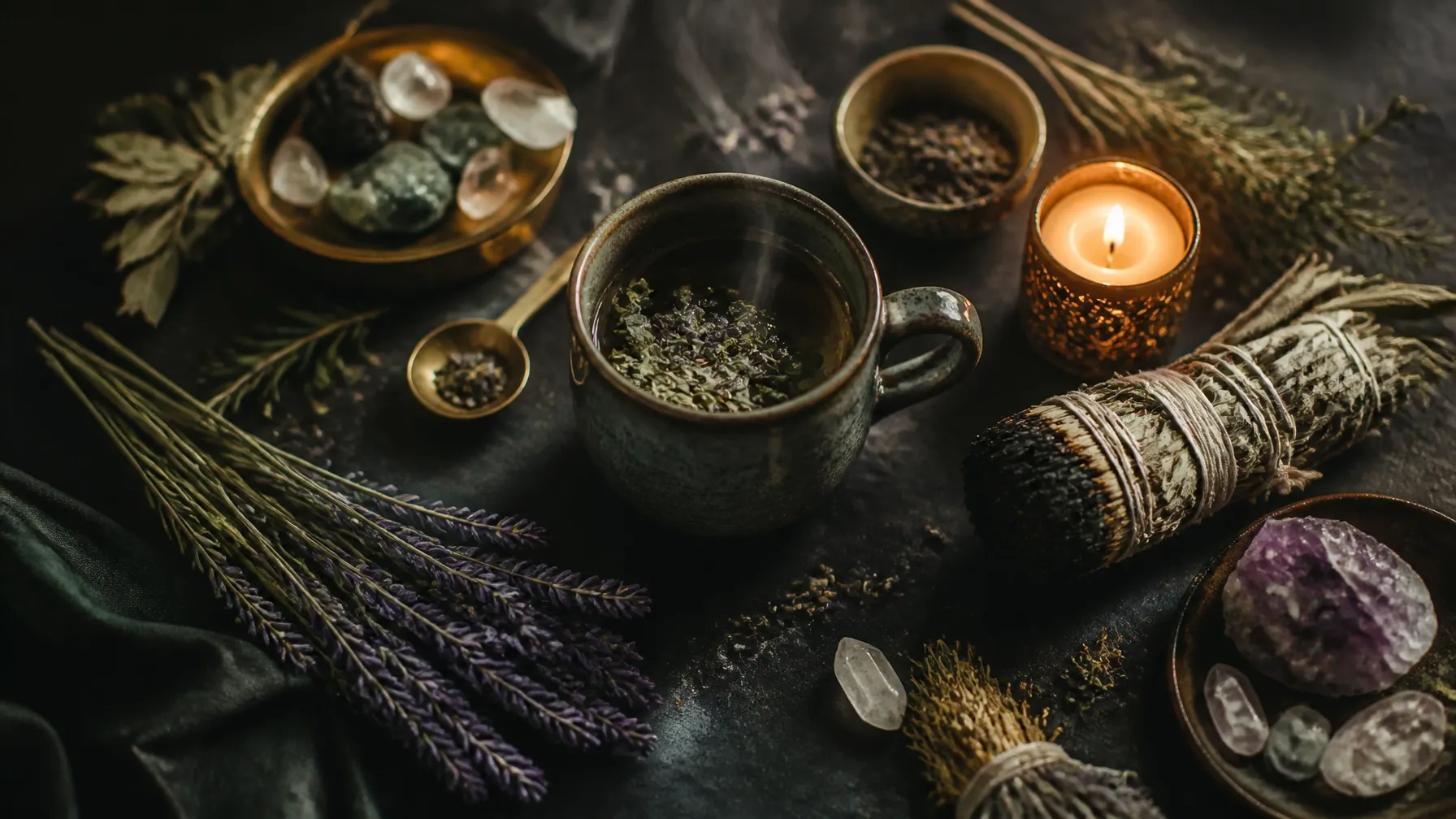
- Herbs or dried flowers: Rosemary, lavender, or other ancestral herbs may be included for their scent, family associations, or simple beauty. You don’t need to know a special meaning for them. Your own connection is enough.
- Fresh water: A clean glass or bowl of water can be a simple offering and a reminder to pause. Refresh it regularly. Customs around offerings vary, so follow your own family or cultural tradition if you have one.

What you don’t need to worry about
You don’t need expensive items, perfect styling, or a complete understanding of your family history. The names you know are enough. If you’re curious about relatives you never met, you can ask family members for stories, look through old photos, or simply hold space for the unknown.
The word “ancestor” can also bring up complicated feelings. Adoption, loss, estrangement, and painful family histories are real, and you don’t have to honor someone who harmed you. You choose who belongs in your space. That may include blood relatives, chosen family, elders in your community or craft, or even the generations you hope will come after you. Your altar can reflect care, safety, and the connections you want to nurture.
A simple first ritual
When you’re ready, you can dedicate the space in a way that feels natural to you. There’s no special script to memorize.
- Wipe the shelf or table clean.
- Place each item slowly, thinking about why you chose it.
- Light a candle if it’s safe, or switch on a small light.
- Say a few words in your own language, or sit quietly for a moment.
You might say:
“To the people and elders whose lives helped make mine possible, I remember you. Thank you for what was carried forward. May this space hold gratitude, care, and peace.”
Change the words to fit your beliefs and relationships. A few quiet breaths or a moment of silence is enough. This isn’t a test; it’s an invitation to be present.
Tending your altar week to week
A simple rhythm makes an altar easier to care for. Refresh the water, replace flowers when they fade, and wipe the surface when it needs it. If you leave food or other perishable offerings, remove them before they spoil. Follow the customs of your own tradition if they guide you.
If you travel or need to pause, that’s okay. You can put away perishable items, extinguish any candle, and return when you’re ready. Life happens. A dusty altar is not a failure, and care doesn’t have to be constant to be sincere.
Make it part of your everyday life
Your altar can be a morning touchstone: pause for a breath before the day begins and remember the people whose stories live with you. It can be a place to sit with grief, say thank you, or reflect on what you want to carry forward.
Some people pair altar time with journaling, a few slow breaths, or an evening wind-down. You might write down a memory, a question, or one thing you’re grateful for. These small spiritual awakening steps don’t need to be dramatic. Over time, they can offer a steady practice for ancestral healing and mind body spirit healing: one rooted in remembrance, reflection, and connection.
Practice with respect
Ancestor veneration takes many forms around the world, and practices differ across cultures, families, and faiths. If you’re drawn to a specific tradition, begin with your own lineage where possible and learn from trustworthy people within that community. Approach unfamiliar customs with humility, and be mindful about borrowing from closed or initiatory practices.
A simple space dedicated to your own loved ones and memories can be meaningful without copying sacred symbols or rituals that aren’t yours. When in doubt, keep it personal and respectful.
Begin with what you have
You don’t need a perfect setup to begin. A clean shelf, a name on a piece of paper, and a glass of fresh water are enough to make a small place for remembrance. Let the altar grow naturally, or keep it simple. Either way, you’re building a practice that belongs to you.
If you’d like botanical companions for your rituals, explore the natural offerings from Mystique Roots, a holistic wellness center grounded in plant traditions and everyday care. Herbs, candles, and other natural healing tools can be chosen thoughtfully to support your practice. For more about the values behind the offerings, visit Our Story. Spiritual practices can support personal wellbeing, but they are not a substitute for medical or mental health care.